
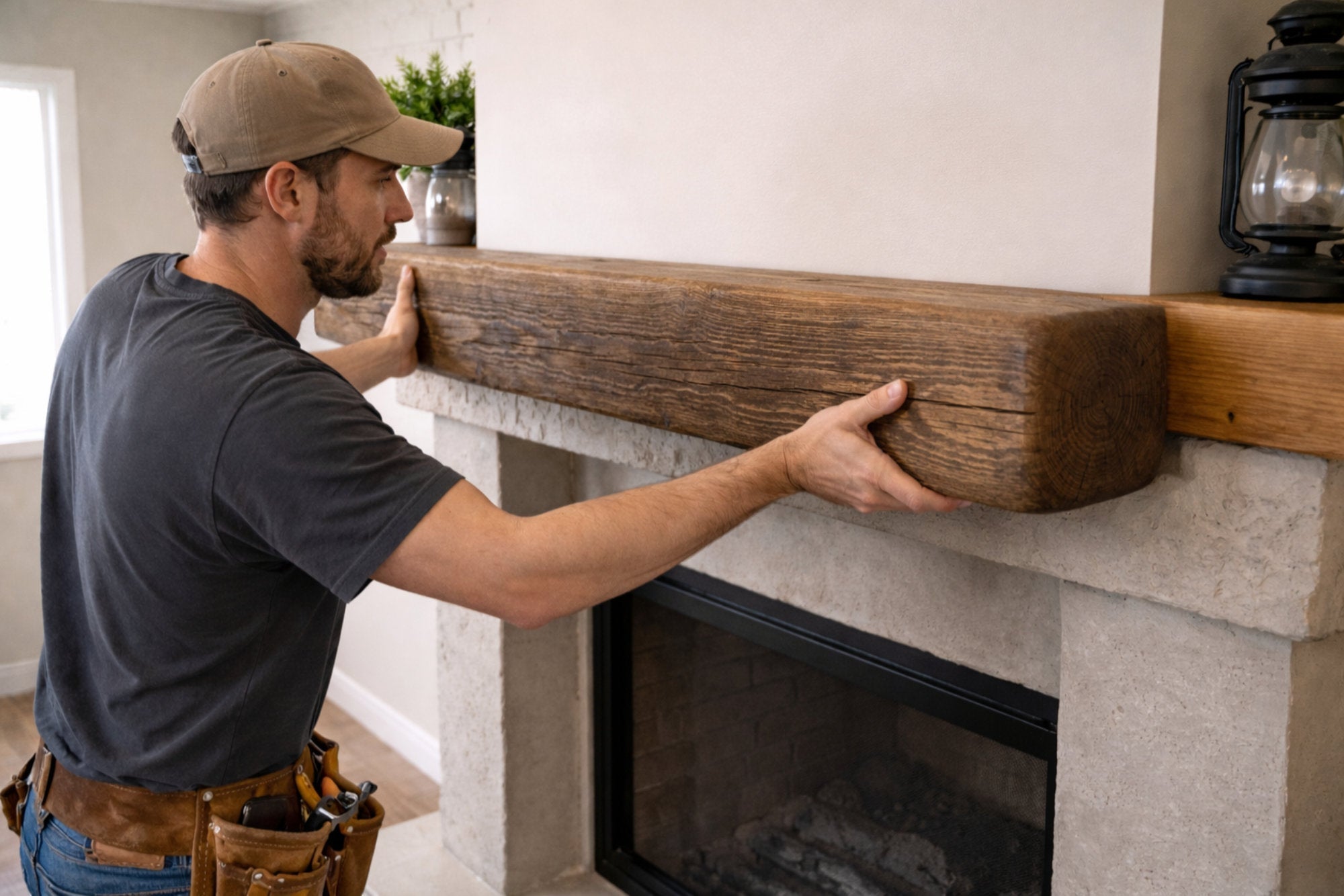
One of the most common questions we hear is whether a mantel cover is actually secure once it’s installed. That concern is completely understandable, fireplace mantels are focal points, and they should feel solid and permanent.
When designed and installed properly, mantel covers are very secure. Below, we’ll explain how they’re supported, how they’re installed, and what factors influence the approach so you know exactly what to expect.
This article focuses on installation and security. If you’d like a broader overview, including measuring, fit, and working with non-standard fireplaces, you can start with our mantel cover guide.
What a Mantel Cover Is Designed to Do
A mantel cover is built to fit over an existing mantel, not hang off the wall on its own. That existing structure provides most of the support.
Rather than relying on a single fastener or bracket, a well-made mantel cover uses:
-
The existing mantel for structural support
-
Discreet attachment points that we will discuss below.
The result should feel solid and intentional—not like a temporary add-on.
How Mantel Covers Are Supported
In most installations, the cover is supported in two ways:
1. The Existing Mantel
The original mantel supports the cover and carries the weight of both the cover itself and any décor placed on top of it.
2. Discreet Fasteners
Depending on the situation, we use one of two methods to lock the cover in place.
Method 1: Construction Adhesive
This method works for the vast majority of installations. It’s quick, simple, and doesn’t require special tools or experience. Each mantel cover includes a tube of construction adhesive. A few small dabs placed on top of the existing mantel are enough to hold the cover securely in place.
The adhesive is designed for permanent architectural applications.
Method 2: Discreet Screws
In cases where the cover’s depth extends significantly beyond the depth of the existing mantel—typically more than 75%—we’ll add a few screws along the back edge of the mantel for additional support. We include color-matched masonry screws or trim-head screws depending on the material of the existing mantel.
Not every installation requires fasteners, but when they’re used, they’re minimal, purposeful, and designed to remain unobtrusive.
Do Mantel Covers Need to Be Locked in Place?
Sometimes—but not always.
Whether adhesive or screws are needed depends on:
-
The depth of the existing mantel
-
Whether the mantel is wall-to-wall or floating
-
The weight and proportions of the cover
In many cases, a snug fit alone provides excellent stability. In others, a few small attachment points are added for peace of mind. We account for this during design so there are no surprises at installation.
What About Brick, Stone, or Uneven Walls?
Fireplaces are rarely perfectly flat or square—especially older brick or stone surrounds. That’s normal.
When walls or masonry are uneven:
-
The cover is designed with appropriate allowances
-
Attachment methods are planned around those conditions
-
Minor variations are handled during installation
This is also why photos are helpful during the measuring stage—they allow us to anticipate these details before anything is built.
Will the Mantel Feel Solid Once Installed?
A properly installed mantel cover should:
-
Feel stable when touched
-
Sit flush against the wall
-
Not shift or wobble during normal use
If the mantel feels loose or unstable, something is wrong, and that’s not the experience we aim for. Installation should leave you confident that the mantel belongs there.
Why Fit Matters More Than Hardware
The most important factor in a secure mantel cover isn’t the number of screws, it’s fit.
Accurate measurements and a custom build ensure:
-
The cover seats properly over the existing mantel
-
Fasteners, if needed, stay discreet
This is why measuring correctly and accounting for non-standard conditions upfront makes such a difference in the final result.
For tips on measuring your existing mantel, view our step-by-step measuring guide.
Final Thoughts
Mantel covers are designed to be permanent, stable additions, not decorative shells. When built to fit your existing mantel and installed with the right approach, they’re every bit as secure as they look.
If you’re unsure whether a mantel cover will work in your space, measurements and photos give us everything we need to guide you in the right direction.
Installation & Security FAQs
Will a mantel cover feel solid once it’s installed?
Yes. A properly designed and installed mantel cover should feel stable and secure, with no wobble or movement during normal use. If it doesn’t, something isn’t right—and that’s not the experience we aim for.
Is construction adhesive really strong enough to hold a mantel cover?
Yes. The construction adhesive we use is designed for permanent architectural applications and provides excellent holding strength when used correctly. In most installations, adhesive alone is more than sufficient to keep the cover securely in place.
Will I be able to remove the mantel cover later?
In most cases, mantel covers are intended to be a long-term solution. Removal is possible, but it typically requires care and may leave some marks that need minor repair—similar to removing other permanent home fixtures.
What if my fireplace or wall isn’t perfectly straight?
That’s very common, especially with brick or stone fireplaces. We account for minor variations during design, and installation methods are chosen to accommodate uneven surfaces so the mantel sits cleanly and securely.
View our collection of custom fireplace mantel covers.
Share:
How to Measure a Fireplace Mantel for a Cover (Step-by-Step)
Can Mantel Covers Be Installed Over Brick, Stone, or Uneven Fireplaces?